When exploring what services memory care facilities provide, the core answer includes 24-hour supervision, personal care assistance, medication management, structured daily routines, and specialized cognitive support for a loved one living with Alzheimer’s disease or another form of dementia.
While most memory care communities offer these foundational memory care services, the environment and care delivery model can differ dramatically:
- 24/7 Safety & Supervision: Secure environments featuring door alerts and enclosed outdoor gardens to prevent wandering.
- Personal Care Tasks: Daily living assistance with bathing, dressing, grooming, and mobility.
- Health & Medication Support: Administering daily medications, health monitoring, and coordinating visiting doctors or physical therapy.
- Structured Rhythms & Dining: Home-cooked meals, hydration monitoring, and memory-focused activities like art therapy and reminiscence therapy.
At Cedar Creek, we deliver these essential services across five boutique residential homes in Bethesda, Rockville, and Silver Spring. Four of our homes support just eight residents, while Maple Ridge accommodates 14. We strive to have daytime staffing ratios averaging 1:3 or 1:4; our small-home setting allows us to tailor every service around your loved one’s physical and mental health, personal preferences, and familiar routines.

Not sure whether your family member needs traditional assisted living, residential memory care, or a higher level of medical support? Call us at (301) 701-3908 or schedule a tour today to speak with our care team about your options.
Assisted Living vs. Large Memory Care vs. Residential Memory Care
Memory care can be offered in several distinct settings. While the size of a community does not dictate its quality, environment significantly influences noise levels, daily routines, caregiver familiarity, and overall service delivery.
Side-by-Side Comparison
Feature |
Traditional Assisted Living |
Larger Memory Care Community |
Cedar Creek Residential Homes |
|---|---|---|---|
| Primary Purpose | Help with daily living tasks while supporting maximum independence. | Dementia-specific supervision, safety, and structured support. | Personalized dementia care in a small, home-like residential setting. |
| Environment | Apartment-style senior living community. | Dedicated wing or large secured campus. | Familiar single-family homes in Montgomery County neighborhoods. |
| Capacity | Varies widely (often 50 to 150+ residents). | Often large, divided into specific care units. | Eight residents in four boutique homes; 14 residents at Maple Ridge. |
| Staffing Ratios | Varies by provider and care shift. | Varies by provider and care shift. | Approximately 1:3 or 1:4 during daytime hours, depending on the home. |
| Dining Experience | Usually communal, cafeteria-style dining. | Centralized or neighborhood unit dining rooms. | Home-cooked meals served in residential dining spaces. |
| Activities & Routines | Broad group social calendar. | Structured, dementia-focused programming. | Small-group and individual activities tailored to personal history. |
| Atmosphere | Active, community-oriented social hub. | Purpose-built, highly structured facility. | Quiet, familiar, and non-overstimulating homelike environment. |
Understanding the difference between memory care and assisted living can help you identify the safest, most supportive starting point for your loved one’s needs.
Safety and 24-Hour Support in a Small Residential Home
Quality memory care requires continuous supervision throughout the day and night. To protect residents living with Alzheimer’s disease or advanced cognitive impairment, facilities rely on specific architectural and environmental safety features:
- Secure Environment: Locked and alarmed entrances prevent unsafe wandering while preserving resident dignity.
- Enclosed Outdoor Spaces: Fully fenced backyards, gardens, and walking paths allow residents to safely enjoy fresh air without risk.
- Navigation & Fall Prevention: Clear interior lighting, simplified floor plans, non-slip surfaces, and emergency alert systems reduce fall hazards.
The National Institute on Aging recommends implementing proactive safeguards when an individual has a history of wandering, as disorientation can quickly lead to unsafe situations.
The Value of Caregiver Proximity
While physical safety features create a secure foundation, environmental design alone cannot prevent every incident. True safety depends on caregiver responsiveness, rapid observation, and deep familiarity with each resident’s daily routines.
At Cedar Glen, Hillwood, and Clifton Woods, we strive to maintain daytime caregiver ratios of an average of 1:3. Auxiliary House and Maple Ridge generally maintain an approximate 1:4 daytime ratio.
In an intimate, 8-to-14 resident home, high caregiver proximity allows our staff members to notice subtle behavioral shifts immediately. Our caregivers quickly learn where your loved one prefers to sit, when afternoon restlessness typically begins, and which comforting techniques offer the most effective reassurance.
Personal Care, Medication Support, and Health Coordination
Understanding what services memory care facilities provide requires looking closely at daily health maintenance and personal support. Quality memory care combines compassionate assistance with proactive medical oversight to protect both physical and mental health.
Daily Living Assistance
Memory care services assist with essential personal care tasks while encouraging as much personal independence as possible:
- Activities of Daily Living (ADLs): Gentle support with bathing, dressing, grooming, toileting, and hygiene.
- Mobility & Transferring: Safe assistance with walking, wheelchair transfers, and positioning to reduce fall risks.
- Nutritional Support: Help during mealtimes, including encouragement and specialized utensils if self-feeding becomes difficult.
Our caregivers preserve resident dignity by offering cueing and guidance rather than taking over tasks your loved one can still perform safely.
Medication Management and On-Site Healthcare
Proper medication management is a core component of residential memory care. Our trained staff manage daily administration, maintain accurate documentation, coordinate prescription refills, and observe residents for potential side effects or changes in health.
To simplify healthcare access, we coordinate on-site visits from healthcare professionals, including:
- Visiting physicians and primary care nurses
- Licensed physical therapists, occupational therapists, and speech therapists
- On-site podiatrists and mobile dental specialists
You and your loved one are always welcome to keep existing personal doctors. When a physician orders rehabilitative physical, occupational, or speech therapy, those sessions take place directly inside our residential homes.
Scope of Care Note: Residential memory care supports complex cognitive and personal care needs, but it does not replace acute hospital care or 24-hour continuous skilled nursing. Always ask potential care providers how medical concerns are escalated and what protocols exist if care needs exceed licensed capabilities.
Learn more about our structured approach to medication management for older adults.
Why Caregiver Consistency Matters in Dementia Care
Caregivers who undergo specialized training learn how to navigate subtle shifts in communication, mobility, appetite, sensory perception, and behavior. While rigorous dementia training is critical, staff consistency is equally essential for resident well-being.
When our staff members work in a small-house setting with a dedicated group of residents, they develop a deep understanding of each individual’s non-verbal cues. Subtle changes in a resident’s posture, facial expressions, gait, sleep habits, or appetite often signal underlying pain, anxiety, fatigue, or medical issues.
The Benefits of Low Staff Turnover
For individuals experiencing memory loss, adapting to unfamiliar staff members can trigger confusion and anxiety. Seeing familiar, friendly faces every day fosters trust, emotional stability, and a sense of safety.
We prioritize staff retention to maintain a warm, nurturing environment. Many of our caregivers possess over a decade of hands-on memory care experience, and several team members have cared for residents in our homes for over 10 years.
When you tour and evaluate care facilities, ask about:
- Dementia-specific staff training programs
- Employee turnover rates and caregiver longevity
- Daytime and overnight staffing ratios
- Protocols for escalation to a licensed nurse or physician
Meals, Activities, and Daily Rhythms
Large, bustling dining halls and overwhelming activity calendars can trigger sensory overload for someone experiencing memory loss. In a boutique residential setting, daily routines take place at a calm, natural pace that honors personal history and emotional well-being.
Home-Cooked Dining and Transparent Pricing
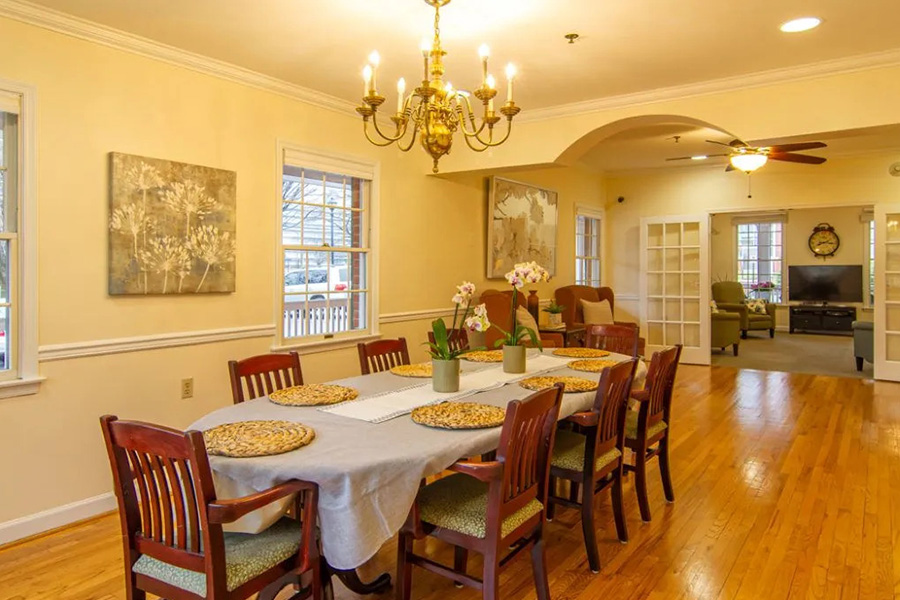
Meals in our homes are freshly prepared in residential kitchens and served in familiar, intimate dining spaces. Small-home dining allows our caregivers to learn individual preferences, such as how your loved one likes coffee, which comfort foods bring joy, and whether a quieter dining seat helps reduce anxiety during mealtimes.
Cedar Creek operates on an all-inclusive daily rate structure. This predictable flat fee covers:
- A private room with familiar furnishings
- Three daily home-cooked meals plus wholesome snacks
- Complete personal care tasks and daily living support
- Full medication management, housekeeping, and laundry services
- All internal sensory, social, and recreational activities
Our daily rates will never increase due to an increased level of care, eliminating the financial stress of tier-based upcharges. You remain responsible separately only for personal medications, individual toiletries, and specialized medical supplies.
Meaningful Life Enrichment
Engaging activities in memory care should inspire connection, joy, and purpose without causing frustration. Following guidelines from the National Institute on Aging, daily schedules are adapted to what residents can comfortably accomplish.
Life enrichment programming includes:
- Therapeutic Expressive Arts: Guided art therapy and music therapy sessions that tap into creative expression and long-term memory.
- Reminiscence & Sensory Engagement: Reminiscence therapy using family photo albums, interactive hometown digital journeys, and structured storytelling.
- Outdoor & Horticultural Therapy: Tending backyard flower gardens and vegetable patches to encourage physical movement and cognitive stimulation.
- Familiar Domestic Routines: Folding laundry, setting the table, or baking to reinforce a sense of accomplishment and belonging.
Health Expectation Note: Recreational activities, art therapy, and cognitive stimulation are designed to foster social interaction, comfort, and self-worth. They are communication tools and lifestyle enhancements, not medical treatments, cures, or guaranteed ways to halt cognitive decline.
Emotional Support & Local Montgomery County Locations
Effective memory care extends far beyond physical assistance. For individuals with cognitive impairment, emotional security depends heavily on familiar caregivers, quieter shared spaces, gentle social engagement, and consistent daily rhythms.
Large assisted living communities often feature high noise levels, bustling hallways, and shifting staff schedules, which can trigger anxiety or sensory overload. In contrast, small residential homes foster a soothing atmosphere where residents build genuine bonds with caregivers and housemates.
Convenient Locations for Local Families
Staying connected with your loved one plays a crucial role in maintaining resident well-being. We operate five residential memory care homes situated in quiet, established neighborhoods across Montgomery County:
- Bethesda, MD: Auxiliary House and Hillwood
- Rockville, MD: Cedar Glen and Maple Ridge
- Silver Spring, MD: Clifton Woods
This local footprint makes it easy for family caregivers living in nearby communities like Potomac, Chevy Chase, Kensington, Gaithersburg, Takoma Park, and Washington, D.C., to visit frequently and remain actively involved.
Learn more about how our home-like dementia care supports calmer daily routines without the overwhelming pace of a large institutional campus.

Supporting Medical Needs and Aging in Place
While residential memory care offers comprehensive supervision and daily living support, it is not designed to replace hospital-level acute treatment, continuous skilled nursing care, intensive psychiatric care, complex respiratory support, or dedicated 1-on-1 private duty nursing at all times.
When health needs evolve beyond routine memory care, additional medical support can often be integrated directly into our homes:
- Visiting Healthcare Specialists: On-site visits from primary care doctors, podiatrists, and physical or occupational therapists.
- Home Health Services: Supplemental nursing support for specific medical treatments.
- Integrated Hospice & Palliative Care: Partnering with licensed hospice teams to manage pain and symptom relief, allowing residents to age in place in a familiar environment.
We work closely with local healthcare organizations to coordinate supplemental support whenever appropriate. If a resident’s medical condition advances beyond what our homes can safely accommodate under state licensing, our team helps you plan a smooth transition to a specialized medical facility.
Learn more about our compassionate approach to end-of-life care and hospice coordination.
Have questions about your loved one’s specific medical needs, or ready to see our homes in person? Call us at (301) 701-3908 or schedule a private tour today to speak with our care team.
Frequently Asked Questions
Sources
- National Institute on Aging. (2024). Adapting activities for people with Alzheimer’s disease. U.S. Department of Health and Human Services. https://www.nia.nih.gov/…
- National Institute on Aging. (2024). Coping with Alzheimer’s behaviors: Wandering and getting lost. U.S. Department of Health and Human Services. https://www.nia.nih.gov/…