
Choosing between memory care vs home care is one of the most important decisions many families face when supporting a loved one with Alzheimer’s and other forms of dementia. Both memory care and in-home care provide valuable care services, but the right choice depends on safety, medical needs, and how dementia progression affects daily living over time.
Understanding the key differences between these options can help family members make an informed decision that protects physical health, mental health, and overall well-being.

Understanding Memory Care Facilities
A memory care facility is a purpose-built setting designed specifically for individuals living with memory loss, cognitive impairment, and Alzheimer’s disease. Unlike a traditional nursing home, memory care communities focus exclusively on dementia care and provide specialized care for a dementia patient as needs change.
Memory care services typically include:
- Round-the-clock care provided by trained caregiving staff
- A strong staff-to-resident ratio for individualized attention
- Secure safe environment with alarmed doors and wandering safety modifications
- Specially designed paths and structured spaces that reduce confusion
- Extensive memory care classes and therapeutic engagement
- Assistance with daily living, personal care, meal preparation, and medication reminders
- Emotional support that strengthens stability and comfort
While state regulations mandate dementia-specific training for all licensed communities, we believe true care goes further. Our specialized approach to dementia care focuses on preserving dignity and providing the consistent routine that brings families peace of mind.
Understanding In-Home Care
In-home care allows your loved one to age in place, surrounded by the comfort of their own memories. This is often an ideal solution during the early stages of cognitive impairment when routines are familiar, and safety risks are manageable.
Professional home care providers can assist with:
- Daily Living: Support with bathing, dressing, and “homemaker” services.
- Nutrition: Meal preparation and dietary monitoring.
- Medical Needs: Medication reminders and limited skilled wound care.
- Flexibility: Assistance ranging from a few hours a week to 24/7 “live-in” support.
As dementia progresses, however, the logistics of “aging in place” often shift. Managing wandering, nighttime “sundowning,” or behavioral challenges can quickly lead to caregiver burnout. While the National Institute on Aging notes that community-based services can fill some gaps, many families find that the comprehensive, secure environment of a memory care community eventually provides more peace of mind.
Key Differences Between Memory Care and Home Care
When comparing memory care vs home care, the major difference lies in structure, supervision, and dementia expertise.
Memory care communities offer a secure, supportive environment with built-in safety modifications such as alarmed doors, wandering protections, and specially designed paths. Home care takes place in the loved one’s own home, where safety modifications may need to be added over time.
While memory care offers the stability of 24/7 onsite staffing, home care offers the flexibility to scale support as needed. To determine which level of intensity matches your current situation, it helps to see where your loved one sits on the dementia progression timeline.
Benefits of Memory Care Communities
Many families transition to memory care when safety, medical needs, or behavioral concerns increase.
Benefits include:
- Safe environment designed for cognitive impairment
- Strong staff-to-resident ratio for personalized attention
- Structured routines that reduce anxiety
- Skilled care coordination, including physical therapy
- Emotional support for both residents and family members
- Relief from constant caregiving responsibilities
Memory care communities are designed to support both physical health and emotional well-being as dementia progresses.
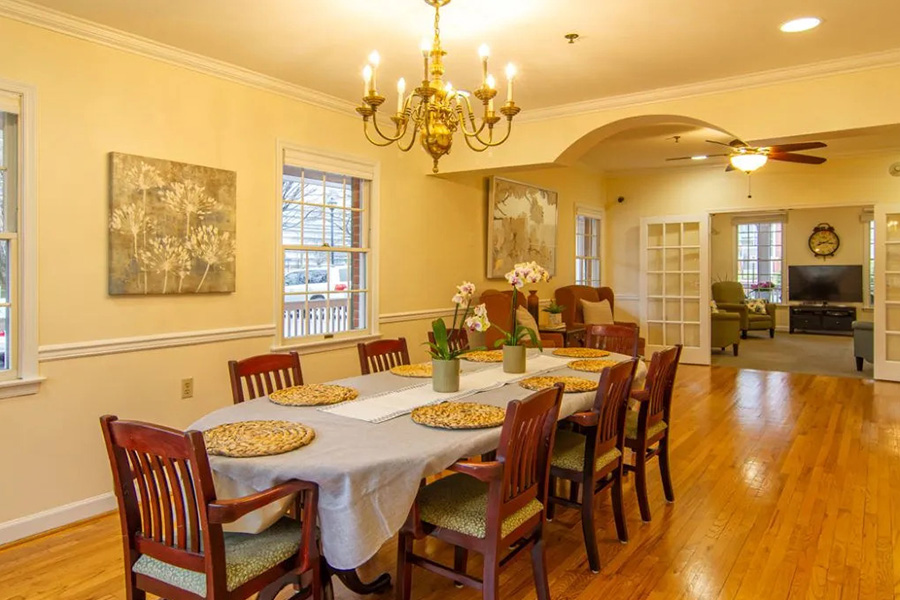
Benefits of Home Care
Home care is often the first choice for families, as it allows a loved one to age in place during the early stages of dementia. This familiarity can be vital for reducing the anxiety often associated with memory loss.
Key benefits include:
- Consistent Environment: Remaining in the “same house” preserves the sensory cues a senior relies on.
- Scalable Support: Care services can range from a few hours of companionship to specialized, around-the-clock assistance.
- Family Connection: Enables families to stay deeply involved in the day-to-day rhythm of care.
While home care is highly adaptable, the Alzheimer’s Association reminds us that caregiver support and education are essential to prevent burnout. Eventually, as safety concerns like wandering or advanced cognitive decline develop, the logistics of maintaining a 24/7 safe environment at home can become an overwhelming challenge for even the most dedicated families.
Cost Considerations
Cost is often central to the informed decision process.
While in-home care may appear less expensive initially, around-the-clock services can become costly over time, especially when multiple caregivers are required to provide similar services.
Cedar Creek’s All-Inclusive Daily Rates
Cedar Creek offers all-inclusive daily rates that remain consistent even if care needs change. Families never have to worry about surprise add-on fees.
The daily rate includes:
- Personalized dementia care
- Assistance with daily living and personal care
- Medication management
- Housekeeping and laundry
- Meal preparation
Residents are responsible only for their own medications and personal care items.
Our Five Boutique Memory Care Homes in Maryland
At Cedar Creek, we believe care is most effective when provided in a setting that feels familiar. We operate five intimate residential homes nestled in quiet, local neighborhoods, ensuring your loved one remains part of a community, not just a resident in a facility.
Bethesda Locations
- Auxiliary House: A serene environment focused on personalized routines.
- Hillwood: Providing expert care in a dignified, home-like setting.
Rockville Locations
- Cedar Glen: Known for its warm atmosphere and dedicated staff.
- Maple Ridge: Offering a specialized 1:4 staff-to-resident ratio for those requiring more intensive support.
Silver Spring Location
- Clifton Woods: Combining safety with the comfort of a neighborhood home.
Additional Specialized Support
We understand that the needs of a family can change overnight. Whether you are looking for short-term respite care to prevent caregiver burnout or require compassionate end-of-life care for a peaceful transition, our team is here to support you every step of the way.
Frequently Asked Questions

Making the Best Choice for Your Loved One
Every loved one with dementia has unique needs. Some may thrive at home during the early stages, while others require the structured, safe environment of a memory care community.
You do not have to navigate this emotional process alone. Speaking with a knowledgeable care provider can help clarify the right next step for your loved one.
We invite you to schedule a guided tour of one of our five Maryland memory care homes and see firsthand how our supportive environment and skilled caregiving staff can provide safety, dignity, and peace of mind.
Sources
- National Institute on Aging. (n.d.). Services for older adults living at home. https://www.nia.nih.gov/health/caregiving/services-older-adults-living-home
- Alzheimer’s Association. (n.d.). Caregiving support. https://www.alz.org/help-support/caregiving